
Heavenly Father, you have made us for yourself, and our hearts are restless until they rest in you: Look with compassion upon the heartfelt desires of your servants, and purify our disordered affections, that we may behold your eternal glory in the face ofChrist Jesus; who lives and reigns with you and the Holy Spirit, one God, for ever and ever. Amen (Collect for the Third Sunday in Lent).
Our affections are disordered by original sin. Our communities are fractured by it too. It is by God’s grace that our affections are purified and transformed but intentional formation is also important. That transformation does not “just happen” in the Christian (whatever our age).
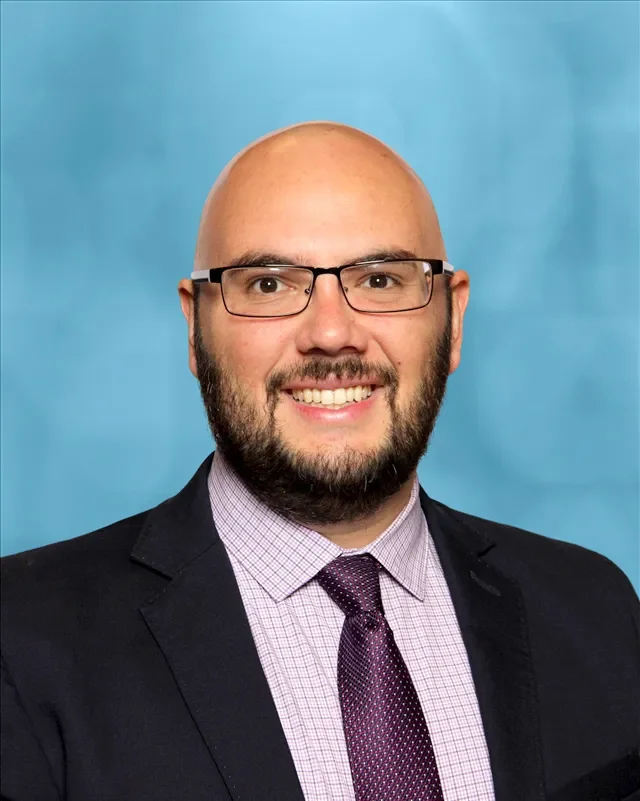
The following is an article from our own Mr. Caleb Sasser, Catechist at St. Anselm and Principal of the Upper School at Westside Christian Academy. The piece addresses formation done in students there but it also diagnoses what is wrong with our communities and how schools and churches can help form minds, and affections that can be effective in redemption. Mr. Caleb Sasser is living out his vocation by shaping students in Westlake. I found his application of his Faith inspiring especially this Lent as we reflect on God’s work in us. I hope you do too. Enjoy.
The Light of Christ in a Hurting World
Through their rigorous disciplines of reading and practice, our graduating classes here at WCA are equipped to “bring the light of Christ” to a confused and hurting world. They are not only prepared to proclaim the gospel, they are particularly suited to enter a world where immorality is cherished; to redeem that world through meaningful relationships and their ability to cultivate beauty within them. We believe our students are particularly well-prepared to address three specific challenges facing our society.
Through their rigorous disciplines of reading and practice, our graduating classes here at WCA (Westside Christian Academy) are equipped to “bring the light of Christ” to a confused and hurting world. They are not only prepared to proclaim the gospel, they are particularly suited to enter a world where immorality is cherished; to redeem that world through meaningful relationships and their ability to cultivate beauty within them. We believe our students are particularly well-prepared to address three specific challenges facing our society.
First: Fractured Communities
Our communities are fractured and broken. The people within them are distanced from one another. The people in our communities have neither the close knit community of the monastery or the guild, nor the civic duty and sense of camaraderie of the earlier decades of our own country. Neighbors not only don’t speak to one another, they often don’t even know one another. It's no surprise this is a society which has a hard time envisioning a world in which true community even exists.
WCA students have been given the vision of what a redeemed community looks like. Their membership in the WCA community has shown one to them. Further, students read books like To Kill a Mockingbird, Life Together, and The City of God that cast this vision for them. Cultivating and championing a redeemed community will require them to take steps that will make them feel uncomfortable, because people who seek to build genuine community in our society are frequently socially uncomfortable. The way to go about this is also to do the uncomfortable things - meet your neighbors; talk to, cry with, build up, and listen to your friends; host meals and eat with others (even in a dorm room), build community in a thousand small ways.
Our graduates are all equipped to do this: We see that equipping in the tutoring they have done as they participated in our community by helping younger students, leading house systems, being ambassadors for our school, and leading schoolwide worship. It can be seen in their desire to encourage and build up their classmates, the younger students, and their teachers. It can be seen through their senior theses where they thought deeply and carefully about precisely this activity. We challenge our graduates to not let this preparation go to waste by commissioning them to do the hard work of building community wherever they find themselves.
Concisely, a consumer culture trains us to treat relationships the same way we treat products: something to sample, evaluate, and discard when it becomes inconvenient. True community does not happen accidentally; it is crafted patiently.
Second: A World Without Imagination, Wonder, or the capacity to appreciate Beauty
Our society’s conception of the world has neither the color of Chaucer, nor the mystery of Lewis. People in our society do not love beauty. Folks around us don’t care about it because they haven’t seen enough of it. Their environments are filled with ugly, practical things. They have been made to live in cities and buildings which are designed not for beauty but for efficiency with much the same mindset as that used to design particularly inhumane dairy farms. The language they speak has none of the imagery of Shakespeare nor the tripping lightness of Frost. To people who speak a purely utilitarian language, the beauty of Christ as the Word makes no sense whatsoever. If people do not know what beauty is, they will not desire it. If they do not desire beauty, they will not create or contemplate it. Without beauty the people perish.
Sin is the receding of the soul from the beautiful”- Gregory of Nyssa
Yet our students have the ability to see the world as miraculous; to see the world as George Herbert did:
The world is charged with the grandeur of God.
It will flame out, like shining from shook foil;
They also have the ability to create this beauty all around them. They have practiced this with our art and music teachers. They have studied from those who are greatest at this - Homer, Michelangelo, Milton, Bach, and Monet. As a result of this carefully curated classical curriculum and environment, WCA students display creativity and a love of beauty in their writing, in their music, in their art, and in their relationships. As with building redemptive community, we charge them also to continue to create and appreciate beauty. The creation of beauty is not a hobby or a secondary task, it is vitally important to make us fully human.
In short, a consumer culture values efficiency, speed, and utility above all else. This renders beauty unnecessary as it cannot be easily monetized or consumed. Beauty must be intentionally created, whether through art, music, writing or intentional shaping of environments and relationships that surround us.
Third: Metaphysically Misled
Those around us do not know who they are or what their place is in the kingdom of God. They question even the nature of reality, but are too intellectually indolent to ponder what the true implications of that may be. This is not to disparage anyone, but to point out that as a society intellectual indolence is valued. People in our society are not only metaphysically misled, but dangerously metaphysically lazy.
As the Nigerian author Chinua Achebe has said, we live in a world where “things fall apart.” The philosophical basis for understanding and interacting with reality has been taken away by men like Derrida and Beckett. Aquinas, Augustine, and Plato have been left behind. We must call people back to a world where truth is valued and where inquiry and the quest for truth is both acknowledged as hard and yet daily attempted.
Students at WCA have been prepared to address this dangerous lack of truth in the world around them. They read and consider the deepest thinkers of the Western World. They write so much that their writing becomes precise, efficient, and logical: an excellent vehicle to communicate and seek after truth. They seek for truth in class debates, in socratic discussions, in essays, and in presentations. Along with building kingdom-honoring communities and cultivating and appreciating beauty, we charge our graduates to keep seeking for truth and keep inspiring others to do it as well.
Briefly, consumer culture discourages deep thinking. Consumers are meant to react, not contemplate. Searching for truth is not passive; it requires people willing to think carefully, speak clearly, and rebuild habits of honest inquiry.
In summary, the world does not need more consumers, but it is desperate for people willing to do the hard work of building. May our students go into the world and create. Create communities where isolation once reigned, create beauty in places that have forgotten it, and create cultures of truth where confusion has taken hold.
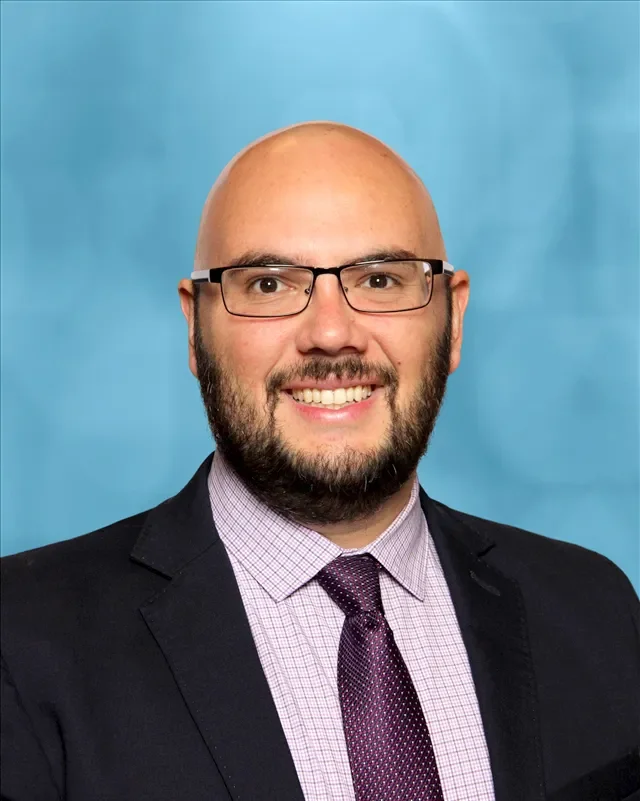
Upper School Principal
Humanities Department Chair
Humanities Teacher
B.A. Classical Liberal Arts: Pedagogy from Patrick Henry College
Mr. Sasser the Upper School Principal and teaches upper school humanities. Prior to joining the WCA staff in 2017 he taught fourth grade at Ad Fontes Academy in Centreville, VA. While at Ad Fontes he earned his permanent teaching certification with the Association of Classical and Christian Schools (ACCS). Caleb enjoys spending time with his family, working in his garden and woodshop, taking long walks, and reading good books. He is excited to be serving and worshiping the Lord Jesus Christ with everyone at WCA.